

You lead through product launches. Board presentations. Organizational restructures. When the conversation turns to managing pressure, it rarely addresses what high-stakes leadership actually demands.
You’re beyond believing that stress management means meditation apps and breathing exercises.
Most advice about handling pressure misses women operating at your level. It treats stress like something to eliminate rather than something to navigate strategically. It offers tactics for temporary relief rather than approaches that support sustained performance across demanding cycles. That framework might help someone managing occasional tension, but it does not serve women running divisions.
You already know this. You don’t avoid challenges, you prepare for them. And instead of waiting for conditions to improve, you build systems that perform under pressure. You design systems that function under pressure. Managing high-stakes seasons deserves the same strategic rigor.
Pressure is not the problem. How you move through it is what matters.
Here are four ways executive women navigate intensity without compromising effectiveness.
1. You Recognize the Difference Between Productive and Destructive Pressure
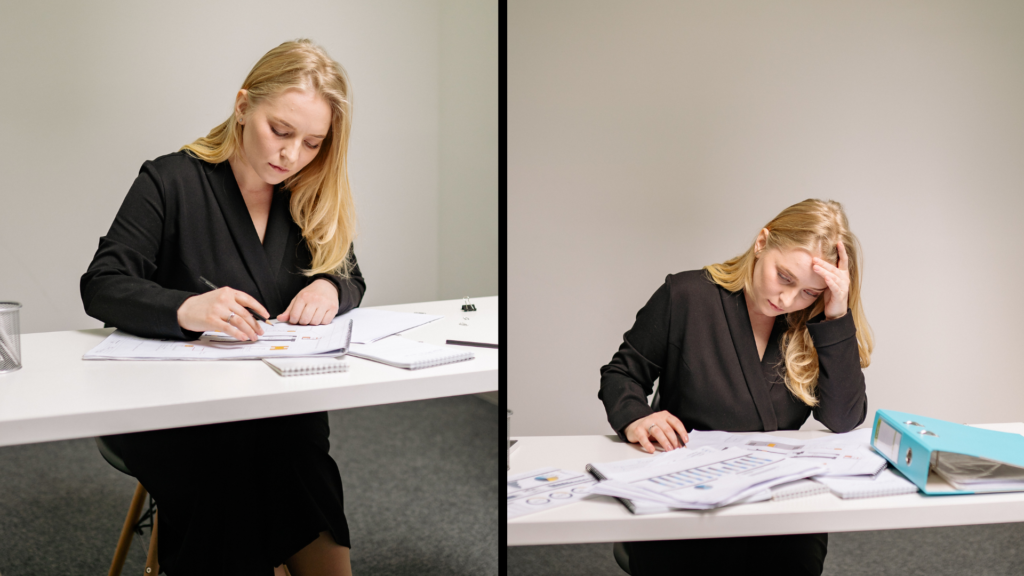
Not all pressure is the same. Some sharpen your focus and stretch your capacity in ways that build competence. Other forms quietly erode your effectiveness and leave you running on diminishing reserves. A deadline that pushes you toward crisp decision-making is different from chronic overload that never allows recovery. A challenging conversation that strengthens alignment differs from ongoing conflict without resolution.
You’re learning to distinguish between the two. A quarter of intensity followed by recalibration is not the same as twelve consecutive months without margin. One asks for your best work. The other asks for more than sustainable performance allows.
2. You Build Recovery Into the Rhythm, Not After the Collapse

You have moved past the pattern of pushing until something breaks and then scrambling to recover. What works now is embedding restoration into the cycle itself. A 10-minute walk between high-stakes calls, a full lunch break during the most demanding weeks, a hard stop on Friday evenings even when projects are live—these are not indulgences.
They are operational decisions that protect your ability to think clearly and lead effectively when it matters most. Strategic recovery prevents the kind of depletion that takes weeks to repair.
3. You Get Selective About What Receives Your Full Attention

You notice when pressure is signaling something structural. A workload that consistently exceeds capacity, a team dynamic that drains more energy than it generates, a commitment During high-pressure seasons, everything feels urgent. You’re refining your ability to separate what truly requires your focus from what can wait, be delegated, or be declined entirely. The project that directly impacts quarterly outcomes requires your strategic thinking. The meeting that could be an email gets skipped. The decision that only you can make receives your attention. Requests that do not align with current priorities receive a clear no.
This is not about doing less. This is about protecting your capacity for what actually moves the work forward. Discernment under pressure is a leadership skill.
4. You Address the Source, Not Just the Symptoms

That made sense six months ago, but no longer aligns with where you’re headed. Breathing exercises help in the moment, but they do not solve a staffing problem. A weekend off provides relief, but it does not address a calendar designed without margin.
You are becoming more intentional about asking what the pressure is pointing toward and whether the solution requires a tactical adjustment or a strategic shift. Sometimes what looks like poor stress management is actually a well-designed role operating under poorly designed conditions.
Here’s What’s True
Most conversations about stress focus on coping. What actually matters for women leading at your level is designing systems that allow you to perform well across demanding seasons without running yourself into the ground.
We explore this further inside my weekly newsletter, where the conversation goes deeper into building the habits and systems that support long-term effectiveness. Subscribe here.